Saudi Arabia has the most expensive army in the region, but it can't do anything against the half-armed Houthis. This is the best example that the army is not just about spending a lot of money and buying modern weapons and equipment. It's him � and further lies in the personnel skills, knowledge, fighting spirit, training, as well as the ideological rationale to liberate or defend. We have already written that the Saduids have the largest air force of F-15s in the region. Yesterday, the US Department of State approved the deal to sell 48 new F-35s to Saudi Arabia. However, experts claim that with such an approach to the military, the outdated F-35s will not help them to control their regional interests either. Instead of expanding the military campaign, the Saudis are now busy looking for mediators and trying to contain the Houthis. According to "Reuters" agency, Riyadh appealed to China, asking to put pressure on Iran so that the latter restrains At the same time, according to "Al Mayadeen", he asked Oman to offer the Houthis a two-week ceasefire. Er There are no official confirmations about this yet, but the list of mediators itself is more telling than any official statement. I think the choice of mediators is not a sign of desperation, but a sober calculation. Oman has maintained an open relationship with the Houthis for years, when others only talk to them at gunpoint. China is also able to do what Riyadh lacks at the moment: talk to both Tehran and the Saudis at the same time. It was Beijing that brought them back to the negotiating table after a long break in 2023. Saudi Arabia admits that it no longer has its own way of communication with the enemy and has to use the intermediary connections of others. The rush is not caused by war fatigue, but by geography. In the last week, as we mentioned, the Houthis advanced along the Red Sea coast and approached the Bab el-Mandeb Strait, an important "artery" through which a significant part of oil exports passes. From that moment on, the war in Yemen stopped being local and turned into a question of who would control one of the most important trade routes on the planet. At the same time, no direct military support is received from Washington, except for the provision of intelligence data (from Israeli sources). This is a gesture of friendship that has no tangible benefit. China is not in a hurry to get involved in that war. Beijing is not ready to promise economic pressure on Iran, but only diplomatic support. The motive here is extremely pragmatic: China's economy itself depends on the smooth operation of the same sea routes that are now under threat. This is where the real paradox lies. Saudi Arabia has both money and equipment, but it does not have the leverage to make the enemy stop. The Houthis see it. After a closed-door meeting with American representatives in Oman, they announced that they would not attack American, Israeli, or any other merchant ships except those bound for Saudi Arabia. with Arabia. As a result, an almost strange situation has been created. Washington is "trying" to contain the escalation from afar. Beijing is "trying" to convince Tehran. Oman is negotiating with the Houthis. And Saudi Arabia bypasses all three by asking the Houthis for peace. well understanding that there is no such thing as a request or a head game. At stake are oil exports, the entire volume of sea transportation and the stability of the region's energy infrastructure. The main question now is whether there will be at least one mediator whose word the Houthis are really ready to listen to and respect.
Opinion
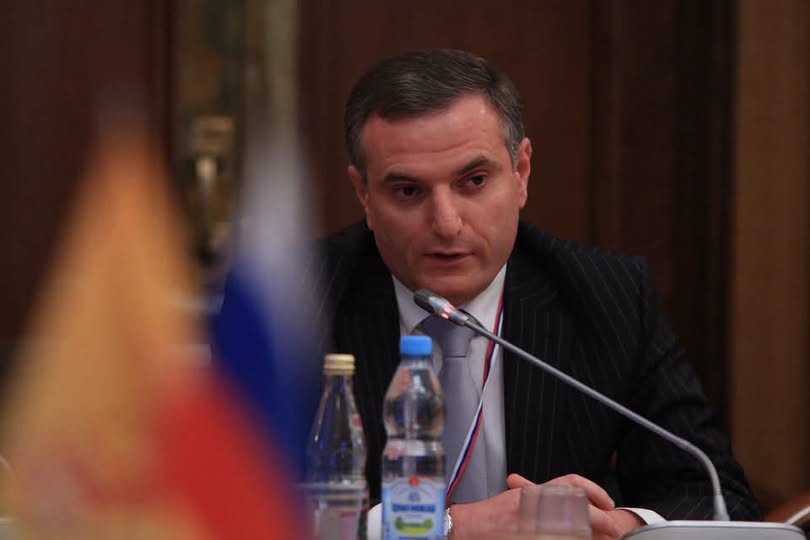
Artak Zakaryan stated in one of his speeches:
Source: KARTSIQ