



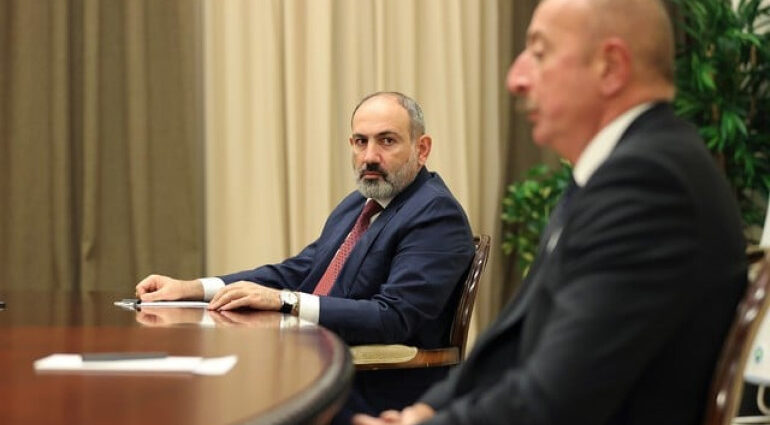
Azerbaijan and Armenia will sign a memorandum of understanding in Washington on Friday pledging to work for peace, Middle East Eye reports, citing regional sources familiar with the situation.
The sources said US President Donald Trump will host Azerbaijani President Ilham Aliyev and Armenian Prime Minister Nikol Pashinyan at the White House for the signing ceremony.
Middle East Eye recalls that although Armenia and Azerbaijan agreed on the text of a draft peace agreement in March, Baku continues to insist on a number of additional conditions for its signing. Azerbaijan’s main demand is that Armenia amend the Constitution to exclude references to the “territory of Azerbaijan” (quotes: Tert.am), which would require a nationwide referendum in Armenia.
The sources added that the two leaders are expected to sign a “letter of intent” rather than a draft peace deal, which would provide Trump with a diplomatic breakthrough.
Azerbaijani Foreign Minister Jeyhun Bayramov called his Turkish counterpart Hakan Fidan on Monday to update him on the summit, a third regional source told MEE.
MEE has reached out to the governments of Armenia and Azerbaijan for comment.
One of the main points of contention remains the so-called “Zangezur Corridor,” which would connect mainland Azerbaijan with its exclave of Nakhchivan via Armenia. Armenia rejects the term “Zangezur Corridor,” arguing that it is irredentist to its sovereign territory of Syunik.
Last month, US Ambassador Thomas Barrack formally offered to lease and operate the corridor to a US company for 100 years, in a bid to allay concerns on both sides about the security and reliability of the transport route. However, Armenia rejected the proposal, saying it would not lease its sovereign territory to a third country.
A regional source familiar with the negotiations told MEE that Turkey had initially proposed the idea of a private company managing the corridor, which was welcomed by both Armenia and Azerbaijan.
“However, the Armenian side demanded that the company also operate on the Nakhchivan side of the corridor, which was unacceptable for Baku,” the source explained.