First of all, I want to thank all those who responded to my previous thematic publication, shared their thoughts, observations and constructive criticism. Those responses once again proved that there is an acute demand for a deep, meaningful and valuable conversation in the public sphere, and that our society is tired of primitive slogans and mutual accusations. In the previous article, we recorded a simple but bitter truth. Responding to a regime built on hatred with mirror hatred, curses and outright denial leads to a dead end. When the opposition field is limited to the reactive slogan "Anti-Nicol", it willy-nilly accepts the rules of the game of the existing government, feeding the same atmosphere of hostility, which is the only fuel for the self-reproduction of this regime. It is high time to switch from the "Anti-Nikol" concept to the "Post-Nikol" concept, which I tried with the relevant article series during my first detention in the "Nubarashen" prison. However, only good wishes are not enough to switch to the "devotion" policy. we need an in-depth diagnosis of how the current government is destroying the foundations of statehood, and a clear, moral and institutional alternative, which the opposition must propose. What is happening in Armenia today is not just the result of managerial illiteracy or tactical mistakes. we are dealing with purposeful value deconstruction. Modern moral philosophy and social psychology clearly show that the deepest social polarizations occur when two worldview poles collide, based on non-negotiable values. Critical thinking and situational unprincipledness. The current regime has implemented a model of extreme situational unprincipledness in Armenia, where all red lines are deliberately erased. When national symbols, historical memory and Artsakh are declared "obstructive myths" and opposed to the so-called "Real Armenia", the state ceases to be the protective shell of the nation. It turns into a faceless "operator" providing social services, where the citizen is perceived only as a tax-paying consumer, and patriotism and moral barriers to emigration no longer apply. In this system, the heaviest losses and unilateral concessions are presented as "contextual inevitability" in an attempt to eliminate the ethics of political responsibility, dull the public's sense of collective shame and honor, and " to turn the "political nation" into an indifferent "population". In order to oppose this destructive policy, the opposition should not offer an emotional rejection, but a systemic and moral alternative based on several key directions. First of all, it is necessary to reconstruct the moral contract between the State and the Citizen, restoring the organic unity of the Motherland and the State. The Pashinyan model of the "Stateless State" is not only unacceptable, but will inevitably lead to the situation of "Stateless Homeland". We must oppose the idea of citizenship as a common destiny, historical memory and moral covenant of responsibility to the generations to the "cadastral" thinking of the current government and the consumer "operator" model. Secondly, it is necessary to return the ethics of responsibility to the political field. any external pressure or "complex context" cannot justify the surrender of state interest, and leaders bear direct moral and historical responsibility for their decisions. The real sovereignty and containment strategy should be built on this foundation, with the reconstruction of the defense system, the development of the military industry, a balanced multi-vector foreign policy and the collective rights of the Artsakh Armenians. with state protection of self and organized subjectivity. Thirdly, cultural and educational revival should be opposed to the social engineering carried out by the government, healing the public's value wounds. The state is obliged to stand by the Armenian Apostolic Church, educational system and historical memory, considering them not as a burden of the past, but as pillars of national resistance. Education must be liberated from the political conjuncture and combine modern technological competitiveness with deep cultural and value literacy. the young generation must first realize the value of their own identity in order to be ready to protect it. "Modern Armenian", this should become the overarching goal not only of education, but also of the entire state. And in that formula, "Armenian" is as important as "Contemporary". Fourth, restoration of healthy collective shame, contrasting it with aggressive consumerism and cynicism promoted at the state level. And through civil honor, it is necessary to reject the normalization of national humiliation. Fifth, we must radically change the ethics of political behavior and internal political communication, breaking the fatalism imposed on the public "whoever comes will be the same". The moral capital of the opposition is formed when the political forces in the opposition field are guided by the same non-negotiable principles that they promise to apply after coming to power. Sixth, the politics of "devotion" requires solidarity or compassion without compromising truth or bargaining with conscience. We must abandon the practice of labeling ordinary citizens, making a clear distinction between the misleading political elite and our misguided compatriots seeking peace and prosperity. Responding to public concerns and economic anxieties with genuine attention will disarm the regime's divisive black-and-white propaganda and demonstrate that national security and dignity are the cornerstones of sustainable prosperity. They are the only guarantee. Seventh, institutional guarantees of justice of solidarity and national reconciliation should be opposed to the atmosphere of fear exploited by the regime. The current government maintains its control by insinuating to a section of society that a change of power will lead to political vendettas and chaos. The basis of future state building should be exclusively the rule of law. post-regime justice should be understood not as political revenge, but as moral purification (catharsis), revealing the real reasons for disastrous decisions through independent public commissions and fair trials. and ensuring legal responsibility. Moreover, it is time for the Armenian Apostolic Church, intellectuals, diaspora structures and civil initiatives to unite around the idea of "National Solidarity and Moral Consensus", fixing as much as possible a re-party. The main, non-negotiable national red lines (sovereignty, cultural heritage, rights of Artsakh, independence of state institutions, etc.). An example of such nationwide consensus can be the Pan-Armenian declaration on the 100th anniversary of the Armenian Genocide, which was adopted and published on January 29, 2015 in Yerevan, by the state government coordinating the events of the 100th anniversary of the Armenian Genocide. � by the commission. The survival of the state requires a balance between cold realism and non-negotiable moral principles. When the opposition can oppose this maelstrom of hatred and situational unprincipledness with a government program, clarity of values and real solidarity, society will rediscover itself as the director of its own destiny. A political nation. Armen Ashotyan Vice President of RPA "Dzoraghbyur" TSC 16.11.2026
Politics
From politics of hatred to moral revival. how to break the regime value trap?
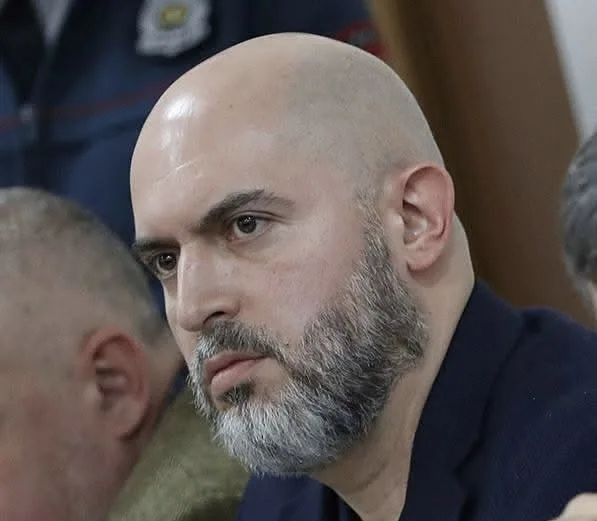
Source: KARTSIQ