



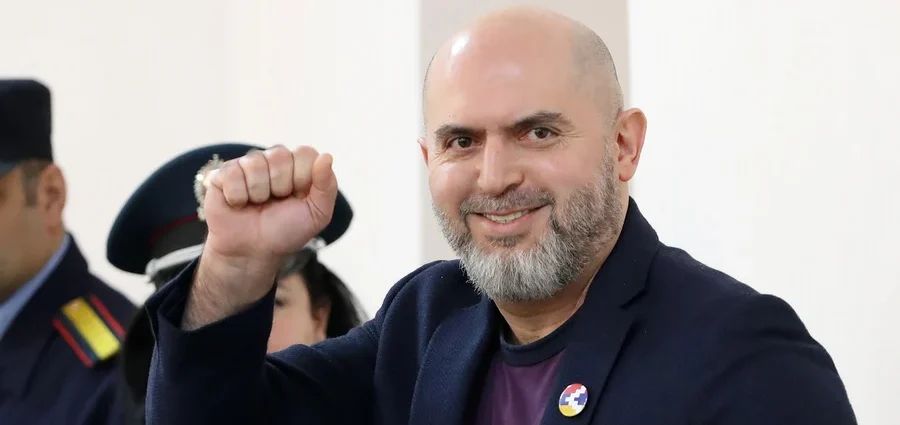
I read with great interest the article by the Minister of Foreign Affairs of the Russian Federation dedicated to the 50th anniversary of the Helsinki Final Act and the establishment of the OSCE. The topic of my modest response to the programmatic article by Minister Lavrov is not so much a global assessment of the organization’s activities (in this regard, I will allow myself to agree with many of the Minister’s arguments), but the regional dimension of the OSCE mandate represented by the Minsk Group for the settlement of the Nagorno-Karabakh conflict. The assessment of the work of the only legitimate international format for finding a mutually acceptable solution to the oldest and bloodiest conflict on the territory of the former Soviet Union, given by Minister Lavrov, is frankly disappointing due to double standards (so criticized in the “Western” practice), washing hands and attempts to shirk responsibility in the best traditions of Western diplomacy, which Mr. Lavrov does not like so much (often in fact), and Alevi (sic!) narratives about the activities of the OSCE Minsk Group. But first things first 1. Double standards A) Assessing the work of the Minsk Group as “The OSCE also failed in Nagorno-Karabakh. The Minsk Group failed to create conditions for dialogue between the parties to the conflict…”, the esteemed minister literally a paragraph above, despite the unresolved issue, mentioning the Transnistrian conflict, not only refrains from such harsh and uncompromising statements, but also expresses regret about the future of the “5+2” format, which, according to him, is being “killed” by Western partners. B) Another example of double standards in the article are numerous references to the principle of the inviolability of borders and silence about the principle of the right of peoples to self-determination, mentioned as one of the 10 principles of the same Helsinki Final Act. Such one-sidedness is puzzling, since high-ranking Russian officials, including Mr. Lavrov, very often refer to the principle of self-determination in the context of the Ukrainian war, thereby strengthening their diplomatic positions. Let me remind you that this principle is one of the three points on which the OSCE Minsk Group developed the basic principles for the settlement of the Nagorno-Karabakh conflict. c) While rightly criticizing the silence of Western institutions, including the OSCE, regarding religious persecution in various countries of the organization, Mr. Lavrov mentions the persecution of the Orthodox Church in Estonia, while ignoring the attacks of the current Armenian regime on the Armenian Apostolic Church.
не освободится. Армен благодарит вас, просит продолжать борьбу и сохранять максимальную корректность в обсуждениях.
2. “Wash your hands” A) If, according to Minister Lavrov, the OSCE Minsk Group was ineffective, it should be remembered that this group, consisting of 9 states, delegated its main powers to three co-chairs, among whom the Russian Federation played a leading role. Moreover, Minister Lavrov himself participated in dozens of meetings, both bilateral and multilateral, aimed at developing a mutually acceptable formula for a fair settlement of this conflict. B) It is no secret that numerous proposals of the OSCE Minsk Group co-chairs were torpedoed by the destructive approach of the Azerbaijani leadership, in response to which the co-chairs, including Russia, refrained from at least publicly criticizing Aliyev and from effective measures to influence the position of Azerbaijan, which contributed to the prolongation of the conflict, the discrediting of the co-chairs in the international arena and the cynicism of the Azerbaijani leadership. c) As painful and sad as it may be, it is also worth noting: after the trilateral statement of November 9, 2020, the main initiative to maintain peace in the region passed to the Russian Federation. Yes, before the start of special military operations, the OSCE Minsk Group continued to operate. A number of statements by the group’s co-chairs confirm this. However, the political, military and humanitarian components of the conflict “on the ground” were under the decisive influence of Russia. And in this context, no one has canceled Russia’s additional obligations. 3. Azerbaijan’s reaction A) President Aliyev previously criticized the activities of the OSCE Minsk Group, but after the ethnic cleansing of Nagorno-Karabakh and the de-Armenianization of the region, the rhetoric of the Azerbaijani leadership violates both the specific principles of the Helsinki Final Act and is full of cynicism and impudence towards the group’s co-chair countries. It is strange that Minister Lavrov’s position on the ineffectiveness of the OSCE Minsk Group so strikingly coincides with the position of the President of Azerbaijan, especially in the context of the new tensions in Russian-Azerbaijani relations. B) The attitude towards the Nagorno-Karabakh conflict as “settled” not only actually copies the position of Azerbaijan, but also legitimizes the war crimes of Azerbaijan, its violation of international law and the undeniable fact of the ethnic cleansing of Karabakh Armenians. While fully sharing the previous assessments of the Russian leadership about the guilt of the current Armenian leadership in the current situation, I cannot ignore the fact that even Pashinyan’s Prague recognition of Nagorno-Karabakh as part of Azerbaijan does not relieve international organizations and the current co-chairs of the Minsk Group of responsibility for the fate of the forcibly displaced Armenians of Karabakh, their right to return, international guarantees for the preservation of their cultural and spiritual heritage and their security in the future. Unfortunately, neither this article nor other public statements by the Russian Foreign Minister demonstrate this responsibility and willingness to defend the rights of the unjustly oppressed, who believed in both international institutions and the “fate” of the Russian presence of the Karabakh Armenians. Dear Minister Lavrov, The mistakes, miscalculations and open betrayal of national interests by the Pashinyan regime do not exempt not only the Armenian people, but also their friends and allies from responsibility for the current situation. Otherwise, the impression created over the years that Nikol Pashinyan’s adventurous line enjoys at least tacit consent, and even more so, actual encouragement from Russia, will only strengthen. Nikol Pashinyan is not the entire Armenian people; arguments in the style of “since he is still the Prime Minister, it means that the people agree with his policy” do not work. The same example is Ukraine, where Russian policy does not identify the entire Ukrainian people with President Zelensky. ARMEN ASHOTYAN Vice President of the Republican
Party Political prisoner 01.08.2025 P.S. The link was posted by Armen Ashotyan’s friends, who received such permission and access from Armen through their lawyers. Unfortunately, Armen does not yet have the right to manage his pages personally and cannot respond to your comments and letters until he is released. Armen thanks you, asks you to continue the fight and maintain maximum correctness in the discussions.
Views 173