



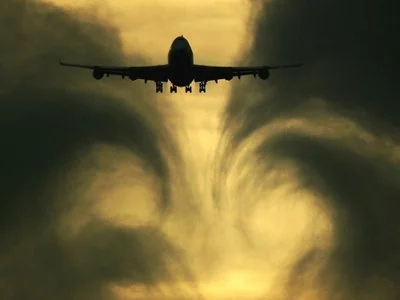
Scientists have developed a technique to mitigate the effects of turbulence on dynamic structures and vehicles, particularly unmanned aerial vehicles (UAVs).
Turbulence is the name given to changes in air pressure that cause an aircraft to shake. It is most noticeable when an aircraft shakes as it goes through changes in air pressure mid-flight.
The study, published in the journal NPJ Robotics, describes how scientists can develop a control technique for aircraft by using an artificial intelligence (AI) system called FALCON to automatically adjust its flight to account for turbulence.
Reinforcement learning, an AI learning method, has previously been used to develop AI-augmented control systems, but only for specific conditions or vehicles. FALCON, in contrast, has been trained to understand the underlying principles that cause turbulence so it can adapt to any conditions.
FALCON is based on Fourier methods, which use complex sine waves to represent data. The researchers found that digitally representing wind as periodic waves is an effective means of modeling turbulence, as the ebb and flow of wind and its effects naturally follow a wave pattern.
The scientists tested the new AI-based system in a wind tunnel at the California Institute of Technology.
They found that after nine minutes of training, during which FALCON continually tried to adapt to changing turbulence and reported the results, the AI was able to maintain the stability of the aerofoil in the wind tunnel.
“The wind tunnel tests conducted at Caltech showed that FALCON can learn in a matter of minutes, indicating the potential for scaling to larger aircraft,” the scientists note. “However, real challenges remain, particularly quickly adapting to diverse and unpredictable conditions and testing performance across a range of UAV configurations and wind conditions.”