



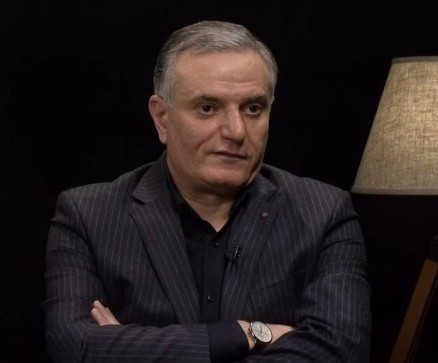
Artak Zakarian, a member of the Supreme Council of the Republican Party of Armenia, wrote:
“A confidential report prepared by the IAEA for its member states confirmed that Iran is storing up to 60% of its enriched uranium in underground bunkers in Isfahan.”
According to the international news agency REUTERS, the IAEA also noted in the report that Tehran has denied Atomic Energy Agency inspectors access to its nuclear facilities, so the exact size of its stockpiles and the status of its program are currently unknown. With access to the facilities impossible, international oversight of Iran’s nuclear program has been virtually lost.
Due to the security situation in the region, the United Kingdom is evacuating its embassy staff from Iran and advising its citizens not to travel to Israel.
The United States has urged staff at its embassy in Israel to leave the country. The Russian embassy in Iran is evacuating its staff.” China and Kazakhstan are urging their citizens to leave Iran and Israel.
France, Germany, Canada, and Sweden are discouraging travel to Israel and advising them to leave Iran.
The Polish Ministry of Foreign Affairs is urging its citizens to immediately leave Iran, Israel, and Lebanon.
Amid escalating tensions in the region, Omani Foreign Minister Badr Albusaid, who arrived in Washington today on an unannounced visit after participating in talks in Geneva the previous day, is scheduled to meet with US Vice President J.D. Vance.
The meeting is aimed at finding ways to prevent a possible military conflict with Iran. Albusaid has played a key mediator role in recent months, facilitating indirect communication between Tehran and Washington. The series of high-level meetings underscores ongoing efforts to maintain diplomatic channels amid a growing awareness on all sides that large-scale military action would be catastrophic for the entire Middle East.
At the same time, President Trump reiterated that he would not rule out military action against Iran if all forms of negotiations were held. A failure.
The US President and the Israeli Prime Minister are also faced with a difficult situation that requires a final decision. Both leaders must emerge from this situation as undisputed victors, but what is the most guaranteed way to do so? All necessary forces and assets are prepared to launch targeted strikes. But who will launch first? Moreover, neither side has any guarantees of preventing a widespread escalation of the conflict or the ability to stop it at the right moment.
Let’s hope that diplomatic and political efforts will prove more powerful than ballistic missiles, multirole aircraft, and strategic fleets.