



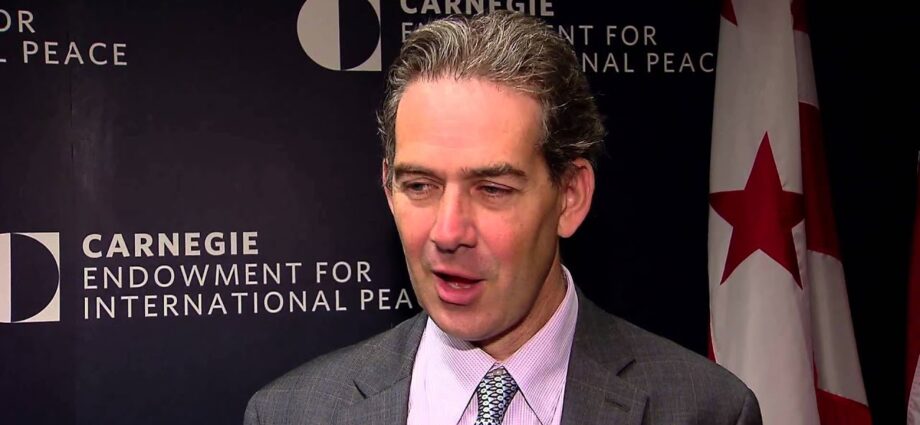
Russia is indeed losing its influence in the South Caucasus, and this is a gradual process. British journalist and leading expert on the South Caucasus Thomas de Waal told Meduza how Russia’s role in the region has changed in recent years.
The countries of the region gained independence 35 years ago, and during this time their perception of Russia as a “near abroad” that is still in their sphere of influence has deviated greatly from reality. An entire generation has grown up in these countries that is independent of Russia and does not speak Russian. The countries have found connections all over the world. Azerbaijan’s closest ally is Turkey, Georgia until recently had strong ties with Europe, Armenia – an alliance with France. Now Russia has become just one of many players.
Russia still has many economic levers in the South Caucasus, but using them to pressure countries will only weaken its influence in the region. For example, Russia can influence Armenia by cutting off its gas, but this will not win the love and support of the Armenian people.
It seems to me that the main moment after which Russia began to rapidly lose its influence in the region was the invasion of Ukraine in 2022, which absorbed huge resources. It influenced the loss of respect for Russia in the South Caucasus.
Another important factor is the Nagorno-Karabakh conflict. Russia has always been able to… “Manipulate relations with Armenia and Azerbaijan. Now Nagorno-Karabakh is lost, and this is a great tragedy for its people. However, one of the results of this event is that both countries have received the opportunity to build their own strategic autonomy,” he said.
According to de Waal, the most important event of recent times was the meeting of Armenian Prime Minister Nikol Pashinyan and Azerbaijani President Ilham Aliyev in Abu Dhabi. They met on their own initiative, it was not an international summit, but a bilateral meeting without mediators.
“The UAE hosted the meeting, but did not participate in it. This is a very positive and healthy signal, indicating the readiness of the two countries to engage in dialogue without the “big brother”, independently determining the agenda for conflict resolution. Russia is completely cut off from this process. More importantly, Armenia and Azerbaijan began to discuss transport and connecting routes without Russia’s participation. This is very different from the trilateral agreement of November 2020, according to which the Border Service of the FSB of Russia was given control over transport communications, and from the work of the trilateral commission of 2021, which was also created to discuss transport and communications issues. Now both sides do not want the presence of Russian services on their territory,” Thomas de Waal emphasized.
Speaking about the mediation efforts of the United States, the expert expressed the opinion that the Americans will intensify their efforts, but one should not have illusions that they are the only ones doing this.
“The US is just one player, the EU and Turkey are also involved in this process. At the same time, there is no external player in the region that could become a new ‘big brother’. And I think this is a healthy situation,” de Waal added.
Returning to Russia, the expert noted that Russia is not really interested in a bilateral peace agreement between Armenia and Azerbaijan. Therefore, it can be assumed that at some point Russia will try to prevent the possibility of reaching an agreement and will insist on its participation in the conflict settlement.
According to de Waal, Russia will intensify efforts to eliminate Pashinyan, who wants to reduce Armenia’s dependence on Russia.
“In June 2026, Armenia will hold parliamentary elections, which are important for Pashinyan. Therefore, we will probably see attempts by Russia to interfere in them in the future. The main problem for Russia is that this is its last chance.
Russia has already lost public support in Armenia, and if it decides to act militarily or by force, it will lose all its remaining approval. Pashinyan is not as popular as before, but the main opposition candidate Robert Kocharyan, who is supported by Russia, enjoys less support,” the expert concluded.