



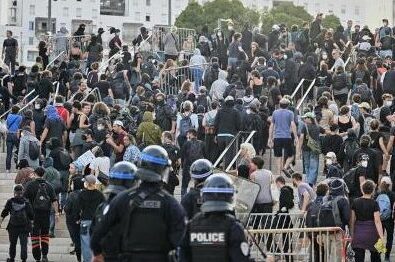
The French Ministry of the Interior has decided to deploy 76,000 police officers and gendarmes to maintain order during 250 protests organized by trade unions across the country, Minister Bruno Retaille announced.
“This is the third day that our law enforcement agencies have been monitoring demonstrations and protests across the country. A total of approximately 250 protests are planned. We have deployed slightly fewer forces [than on September 18], but we still have 76,000 police officers and gendarmes, of which approximately 5,000 are in Paris alone,” the minister said.
The Minister of the Interior stated that authorities are prepared to include radical elements among some of the protesters, and that law enforcement agencies intend to ensure peaceful demonstrations for all who wish to express their opinions without violence. Retaille promised that the authorities would exercise “zero tolerance” for any unrest, and that the instigators would be immediately arrested.
Earlier, Le Figaro newspaper, citing sources, reported that authorities were predicting up to 400,000 people to attend the protests on October 2. This is 100,000 fewer than the Interior Ministry recorded during the trade union demonstrations on September 18. Moreover, analysts predict a significant decrease in tension during the protests across the country, with the exception of a few major cities such as Nantes, Rennes, Toulouse, Lyon, and Dijon, where many far-left activists gather.
On September 19, France’s leading trade unions issued an ultimatum to the government, vowing to continue strikes unless their demands are met. The unions are demanding that the government abandon the budget proposed by the previous government and freeze pensions, social security contributions, and public sector salaries for a year. They are also opposing the cut of 3,000 civil servants, reform of the unemployment benefit system, and raising the retirement age to 64. They are also demanding “tax justice” through the introduction of instruments that would allow taxes on expensive real estate and high incomes, as well as limiting the size of dividends paid to shareholders.
On September 24, leaders of France’s leading trade unions met with Prime Minister Sébastien Le Corneille to discuss the possibility of meeting their demands, but failed to reach an agreement. They subsequently promised strikes and protests on October 2.