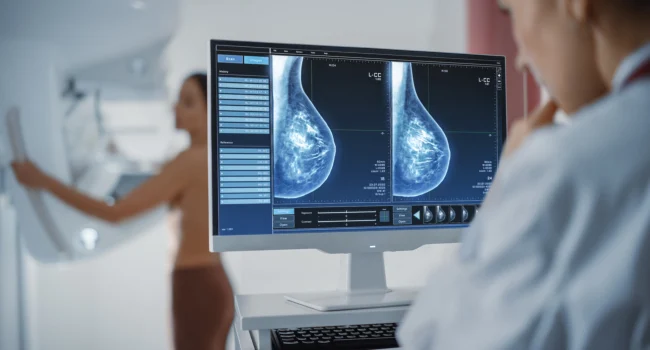
Three screening programs for the detection of cervical, colorectal and breast cancer have been launched in Armenia within the framework of the universal health insurance program. Haykuhi Gyokchyan, adviser on oncology to the RA Minister of Health, announced this at the press conference held today, October 6. According to him, women aged 45 to 68 can register independently through the ArMed system and undergo screening mammography at the medical institution of their choice. it does not even require a family doctor's referral. Gyokchyan noted that all Yerevan clinics included in the insurance program are currently equipped with mammographic equipment. Thus, women of the appropriate age group can independently choose the medical facility and be examined within the framework of the program. The Ministry of Health acquired 10 more mammographs for the regions, which were installed in the regional centers. According to Gyokchyan, regional medical institutions will also join the screening program in the near future. The specialist also emphasized that thanks to the insurance, expensive diagnostic and therapeutic interventions became available for patients through the targeted mechanism of co-financing. In particular, the program included positron emission tomography (PET-CT), which was provided on a paid basis until 2026 (the cost was around 450-500 thousand AMD). Now the state covers 50% of the research cost, and the remaining 50% is paid by the patient. A similar mechanism works in the case of radiosurgery. Previously, such methods as "gamma-knife" and "cyber-knife" were fully paid for by patients and could cost more than 1 million drams. Now they are also provided on the principle of co-financing. According to Gyokchyan, the changes also apply to those with metastatic oncological diseases. If previously they had to purchase a large part of expensive medicines with their own funds, now the state takes over most of these costs. At the same time, the minister's adviser emphasized that the expansion of the drug list remains one of the priority issues. Oncology is evolving rapidly, and new targeted and immunotherapeutic drugs are constantly appearing on the market, many of which are quite expensive. "The task of the state is to keep up with the times as much as possible and at least partially provide patients with these drugs," Gyokchyan stated.
Society
In Armenia, women aged 45-68 can undergo a free screening examination
Source: KARTSIQ