



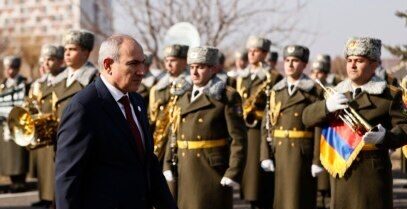
In his speech in Strasbourg, Nikol Pashinyan stated that for him, the army is not an instrument of security, but a reserve. He listed the priorities of his security ideas, highlighting three points, none of which included the army. This speech was not addressed to the international community, but was clearly addressed to Aliyev.
In other words, Nikol Pashinyan directly told Aliyev that Armenia will not become a military force, and therefore cannot pose any threat to Azerbaijan. However, Aliyev continues to arm himself and considers the military might of the Azerbaijani army the state’s primary objective.
But regardless of Aliyev’s actions, Nikol Pashinyan’s statement is either political ignorance or coercion by a defeated man.
According to him, the primary guarantee of security is peace, then cooperation, and then mutual benefit. Meanwhile, both peace and war are interstate relations, and each can change as a result of shifting political interests and existing problems. If interests shift, if a problem arises that requires an unavoidable solution, then, with diplomatic options exhausted, war becomes the only instrument. This is where the importance of the army sharply increases, but if the head of state does not view the army as a guarantee of security, he or she is doomed to defeat from the start.
Therefore, the guarantee of security is not interstate relations—whether peace, cooperation, or mutual benefit—but the army, competent diplomacy, political will, the presence of reliable partners and allies, and a reputation for international reliability.
These factors constitute security mechanisms, none of which, unfortunately, exist in Armenia.