On August 2, 2027, the Moon will block the Sun for observers in parts of Europe, North Africa, and the Middle East. The total phase of the eclipse will last up to 6 minutes and 23 seconds — the longest total solar eclipse visible from land between 1991 and 2114. Because of the unusually long total phase and the large area over which the Moon's shadow will pass, the eclipse is already being called the "Eclipse of the Century." The full phase zone will include southern Spain, Morocco, Algeria, Tunisia, Libya, Egypt, Saudi Arabia, Yemen, as well as small parts of Sudan and Somalia. Where will the full round take place? The width of the moon's shadow will be about 258 km, and it will cross a large part of the planet in about 3 hours and 20 minutes. It will first touch Earth in the Atlantic Ocean, then pass through southern Spain and North Africa, cross the Middle East, and exit the Indian Ocean east of the Chagos Archipelago. The duration of the full phase will depend greatly on the specific location. For example: · Málaga — 1 minute 52 seconds, · Cadiz — 2 minutes 51 seconds, · Tarifa — 4 minutes 39 seconds, · Tangier — 4 minutes 50 seconds, · Oran — 5 minutes and 6 seconds, · Sfax — 5 minutes 41 seconds, · Benghazi — 6 minutes and 7 seconds, · S �hag - 6 minutes and 22 seconds, · Luxor — 6 minutes and 19 seconds, · Jeddah — 6 minutes and 2 seconds, · Mecca — 5 minutes and 10 seconds. The maximum duration of totality, 6 minutes and 23 seconds, will be reached near the maximum point of the eclipse. Egypt will be a particularly interesting place for observation. The maximum point of the eclipse is not far from Luxor, a city on the banks of the Nile, near Luxor Temple, Karnak Temple, Valley of the Kings, Hatshepsut's Temple, and the Monuments of Memnon. Egypt offers almost ideal weather, but you will have to endure the heat For eclipse hunters, not only the duration of the total phase is important, but also the probability of seeing it without clouds. And here the central part of Egypt looks especially attractive. According to climate data, the probability of cloudiness in Luxor region in August is extremely small, about 0.7%. Conditions in eastern Libya and western Egypt are also usually almost cloudless. The main problem is the heat. In August, daytime temperatures in Egypt can reach 43 °C. The full phase in Luxor will begin at approximately 1:02 p.m. local time, so observers will have to find ways to shelter from the scorching sun before the eclipse begins. Another possible factor is dust. Even in the absence of clouds, the atmosphere can be quite hazy due to dust aerosols. How strongly this will affect observations will depend on the wind on the day of the eclipse itself. Instead, temperatures in dry climates can drop rapidly during the eclipse itself. Good conditions are also expected in the southern part of the Mediterranean Sea, particularly south of Italy and Malta, as well as near the coasts of Tunisia and Libya. The situation in the Strait of Gibraltar is less predictable. Here, the probability of cloud cover in August is significantly higher, about 30%. In addition, a characteristic cloud known as the Levanter may appear over Gibraltar. Millions of people will see at least a partial eclipse The total phase will only be available within a relatively narrow zone, but the partial eclipse will cover a much larger area of Europe, Africa and the Middle East. For example, in Madrid, the Moon will cover about 86% of the solar disk, in Lisbon - 93%, in Paris - 52%, in London - 42%, and in Berlin - 34%. Rabat, where about 98% of the Sun will be blocked, and Algiers and Tripoli, about 99.9%, will also be closer to the border of the full phase zone. But even 99.9% is still a partial eclipse. For the observer, the difference is fundamental. only during the complete phase is the solar disk completely covered by the Moon and there is a short period of total darkness. An estimated 88.9 million people will immediately live in the zone of totality, more than three times as many as during the April 8, 2024 total solar eclipse in North America. Because of this, the 2027 eclipse will not only be an astronomical event for travelers and skygazers, but also a massive phenomenon for millions of people. When to expect the next similar event? After August 2, 2027, total solar eclipses will continue almost every year, but most of them will pass over oceans or distant regions. The closest will be on July 22, 2028 — the full phase will be visible in Christmas Island, the Cocos Islands, Australia and New Zealand. Then there will be total eclipses on November 25, 2030 in southern Africa and Australia, on March 30, 2033 in Russia and Alaska, and on March 20, 2034, several countries in Africa, the Middle East, and Asia at once. on But for the duration of totality, the August 2, 2027 eclipse will remain a special event. a complete phase of more than six minutes from land will not be seen again until much later.
News
The solar eclipse of August 2, 2027: where will one see six minutes of complete darkness?
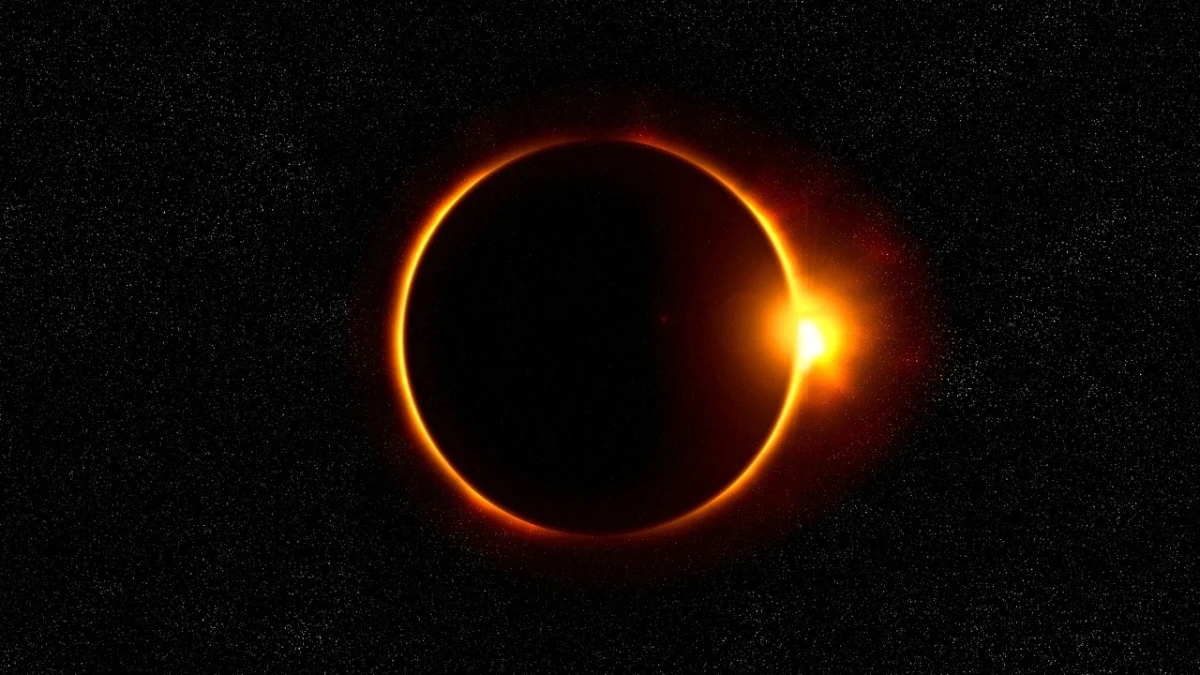
Source: KARTSIQ