Four generations, one kitchen, and the eternal question: “Who's on the table today?” Anahit Sargsyan's house in Yerevan has an old wooden stucco. They don't keep a dowry there for a long time: inside are pictures of children, yellow letters, and a tablecloth embroidered with reproach. “We don't throw it away because it's not furniture, it's a memory,” Anahit laughs and straightens it up, “though honestly it's the only thing in the house that's seen more of us.” The mercury has really seen a lot: the Russian Empire, the Soviet Union, the dark and cold years, the era of the first mobile phones, and the times when groceries, gifts, and even laundry dust reach the doorstep. We talked to people from different generations and found out how their home has changed, a home where everything worked together. The Sargsyan family knows stories about life before the Soviet Union. Anahit's grandmother Siranush had heard them from her grandmother and told her grandchildren so often that they became a family legend. The family lived in a large superdome, with three generations gathered under one roof, and sometimes the brothers' families. The eldest man decided what to breed and whom to marry, the eldest woman managed the economy. Lavash was all baked together at the tandoor with a few weeks' supply. Yogurt, cheese, dried fruit, pickles- almost everything on the table was made with their own hands. “They only bought what they couldn't make - salt, sugar, cloth,” Anahit says. “That's why they went to the market, and it was a real event. My predecessor used to say that they were going on this trip like a holiday. ”Fun was inseparable from work and from the community, with weddings taking place all over the village, singing as they embroidered, and picking up margins. And the main “technology” in the house was the family: lots of hands, a shared work, a shared table. The “fattening” era Siranush, who is 84 years old today, lived most of his life in Soviet Yerevan. Her main memories are connected to one word: “We were fed up from underneath.” “Nothing could just be bought. Good shoes, a service, a carpet - everything had to be taken care of, "he recalls." We were standing in queues, registering, asking acquaintances to bring them from Moscow and sell them underneath. When we bought the first refrigerator, the neighbors came to look. " The Soviet house was stocked. Autumn closed jam and compote with the whole family, dried fruit on the balcony. The girls' dowry began to collect almost from the day they were born: bed linen, crystal, cloths. Dishcloths were placed in the serving room for guests, which was removed twice a year. They were washed by hand, then washed in a washing machine with buckets of water. The phone was one for the entire entrance, the TV was one for the whole family, and they watched it together. In the evening, the men played backgammon in the yard, the women discussed news on the bench, and the children jogged until dark. “It was a mess, but we lived in solidarity,” Siranush says. “If there was a wedding at a neighbor's house, the whole yard would bring out tables and chairs. No one would ask if they needed help or not.” The light was given Armen, the son of Siranush, remembers the nineties as a time that divided life into “before” and “after”, and the two-thousanders refer to the time when the family was learning to live again. “When they lit up all day again, my mother was crying,” he says. “It seems amazing, but after all these years, every lamp was a holiday.” Millennials came home with the first cell phones and a computer to actually talk to relatives in Moscow and Los Angeles. Supermarkets appeared where groceries were stacked on shelves and there was no need to “bake” anything. That's when Armen opened a small family lounge with his father. “We started with one oven and three kinds of bread. My father was standing by the stove, I was carrying goods in an old car to the shops, my mother was keeping records in a notebook. There was no weekend at all, ”he recalls. The responsibilities in the family began to change. Armen's wife, Lusine, worked and did housework at the same time. “We were the first generation to try everything: work, kids, parents, hospitality,” she says. - And with all that, shopping was still a huge part of life. We used to go to markets and shops for half a day every week. ”Individual time Today, the bouquet is led by Armen'sson, David. The record book has been replaced by spreadsheets, café orders come with messengers, and packaging and small appliances are increasingly being ordered online. “I used to come to half the city to find the templates I needed before. Now I compare the options, read the reviews of other bakers, and take my order in a couple of days, ”she says. 29-year-old Anahit's daughter, Mary, thinks about life differently than her grandmother. For her, the main value is not hers, but her time. “My predecessor spent half his life on procreation and cooking. My grandmother on fattening. My mother on delivering. And I want the strength to stay in touch with people,” says Mary. When her son was born, she chose many of the things she needed right from the maternity wardrobe on the phone. “Strollers, clothes, bottles- at night, while the baby was sleeping, I read other mothers' reviews. It's like you're talking to a hundred girlfriends at once, ”she laughs. Most of the purchases came from Ozon, and by the time they left, everything was ready at home. It's the same with household chores. The robot vacuum cleaner was first said to be a “toy” in the family, and now Grandma Siranush is the first to remind her to turn it on before guests arrive. The window washer robot appeared after Anahit once again refused to lift the bucket into the window sill in his hand, and they bought it again from Ozon with a courier to the house. The gathering at the table, as it was a hundred years ago, remains sacred, and it just feels different to prepare for it. “We've been running after tablecloths, mugs and gifts for a whole week,” says Anahit. “Now in the evening, I order everything I need at the tea table, and I choose the gifts of my nephews and my sister's children with my daughter sitting on the couch. I spend my free time focusing on what's important. ”What went on and what's left If we collect the stories of four generations in one place, it's an amazing picture. Queues and the word “fuck” are left in the past. Went to market on totally lost Saturdays and buckets of laundry. In the past, we've had “guest services” that were regrettable. Robots that clean while we're at work showed up. Reviews that replaced the advice of a neighbor. Delivery that became as common a part of life as going to the market on time. But the main thing hasn't changed. The family still gathers around a table. Grandma still teaches her granddaughter how to wrap a toddler, and no appendix will replace that lesson. “Every generation wanted something to make children's lives easier,” sums up Siranush. “Ours seemed to be really easy. The important thing is that we don't break up.”
Culture
From the earpiece to the 'Place an order' button: how we lived and how we live now
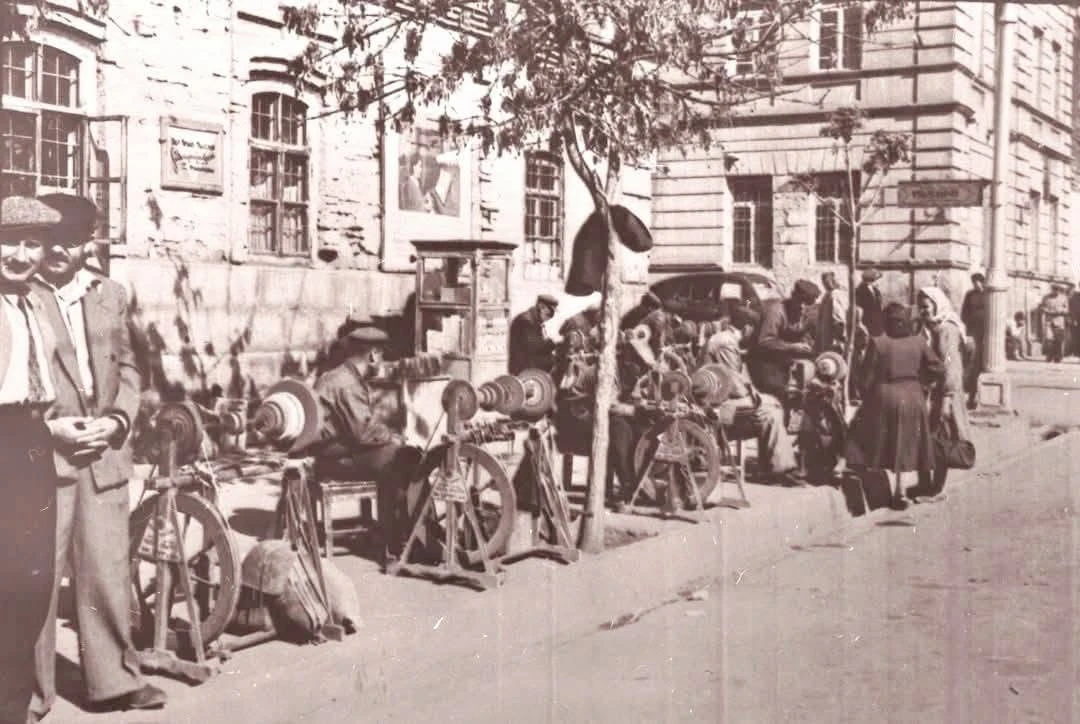
Source: KARTSIQ