In Moscow, there are still doubts about the technical details of the TRIPP project, and we do not know whether the United States is ready to pay due attention to it or not, but certainly Russia would like to participate in the project. Russian political scientist Andrey Kortunov announced this on September 23 at the conference dedicated to Armenian-Russian relations. According to him, Russia strives to have a presence in the transport infrastructures of the South Caucasus, including the railway system, emphasizing that it is one of the initiators of the "North-South" transport corridor. Kortunov added that the western route of this corridor passes right through the South Caucasus, so for Russia this is not only a matter of maintaining regional presence, but also a matter of wider transit interests that connect the country with South Asia. with her. The political scientist emphasized that according to the prevailing opinion in Moscow, a large part of the Armenian population is hesitant about changing the priorities of the country, and the referendum on the EAEU and the EU will show that the Armenian society is not united. in his quest to join the union. According to his assessment, if Armenia moves to the EU, small businesses will suffer the most. "It is possible that Armenia will have to look for other buyers for, say, flowers or mineral water, which can be painful," explained the expert. In his opinion, the South Caucasus, which was closed for a long time, is now becoming really open to foreign players. "For a long time, Russia was the most important and undoubtedly the most influential foreign player. Now that position can be contested, and I think Moscow understands that the region will be open to all kinds of influences. However, Russia's position is that regional problems should be solved mainly by the forces of the countries of the region. That is why Russia has always emphasized the so-called "3+3" format. Moreover, that format is very difficult to implement in practice, and so far the results of those experiments, in my opinion, are quite modest. Nevertheless, I think that Russia will continue to insist on these regional priorities and the importance of the role of the states of the region itself, in contrast to the external players outside it," the expert noted. He admitted that the "special military operation" casts a shadow over Russia's positions in the post-Soviet territory, including the South Caucasus. There, it becomes more difficult to maintain the previous level of influence and engagement. Andrey Kortunov added that, in a certain sense, a lot will depend on how the Russian-Ukrainian conflict will be resolved and what will happen after its settlement.
International News
Russia would like to participate in the TRIPP project. Russian political scientist
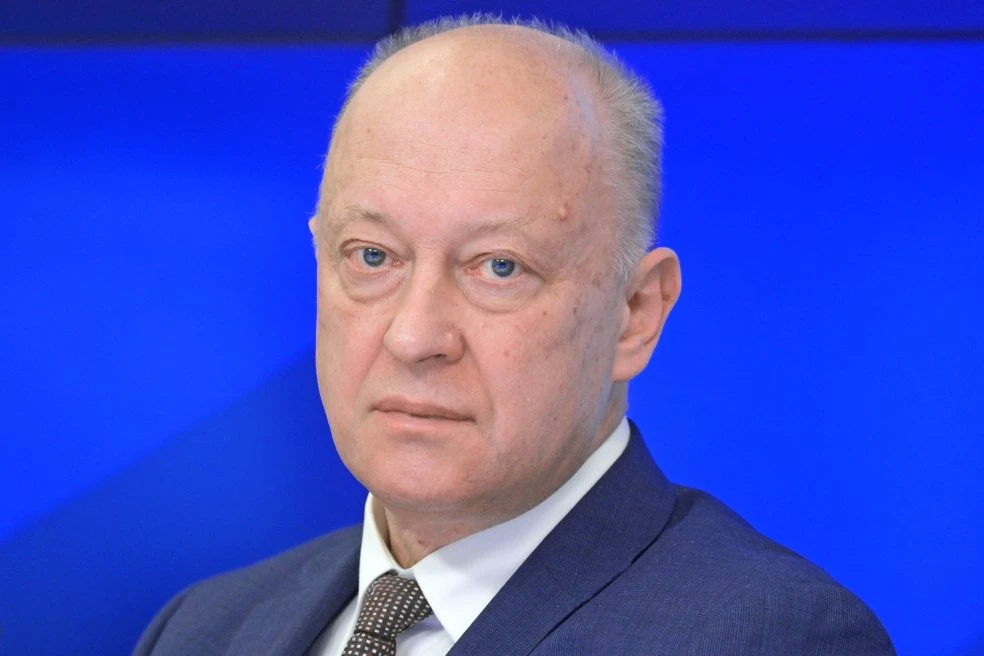
Source: KARTSIQ