Greece cannot accept an agreement with London that would recognize the British Museum's ownership of the Parthenon sculptures, or the option of leasing parts of its cultural monument from that museum. Greek Prime Minister Kyriakos Mitsotakis wrote about it in an article for The Guardian. "Greece cannot accept any agreement that would oblige it to recognize the British Museum's ownership of the Parthenon sculptures, nor any scheme that would mean we are 'borrowing' our own cultural relics. "It's parts," Mitsotakis emphasized. In his opinion, the British public is increasingly leaning towards Greece. "A nationwide representative poll published last year showed that the majority support the return of the sculptures to Greece. Even more impressive is the fact that 72% of the respondents agreed that the sculptures should best be perceived as part of a unified whole with the Parthenon," the Prime Minister wrote in an article published by the government's press service. He noted that Greece has been in dialogue with Great Britain for decades to achieve this goal. "In recent years, my government has had detailed discussions with the management of the British Museum about how to achieve the reunification of the sculptures. That's why I was surprised by the museum's recent proposal that the Bayeux Tapestry brought from France [temporarily to Great Britain] could serve as a model for an agreement on the Parthenon sculptures, Mitsotakis said. It is possible. France provided the tapestry as a single work, and it will be returned to France as a single work. In the case of the Parthenon, everything is the opposite. integral parts of the monument were forcibly taken out and dismembered. Our goal is their final reunification. The intergovernmental committee of UNESCO has repeatedly called on the United Kingdom to conduct a sincere dialogue with Greece on this issue," the head of government added. The sculptures of the Parthenon were illegally taken out of Athens by Lord Elgin more than two centuries ago and moved to Britain, the prime minister reminded. The Bayeux Tapestry consists of nine sections of linen cloth joined together. From the beginning, the tapestry and the sculptures "were intended to be perceived and understood as a unified whole," he clarified. they were carved as integral parts of a single monument. No one would seriously consider cutting the preserved part of the tapestry in two and exhibiting one half in London and the other in Bayeux, insisting that this is the correct way to perceive it. However, this is exactly what happened with the sculptures of the Parthenon. A single masterpiece has been fragmented, and its preserved parts are now kept separately, mainly in London and Athens," explained Mitsotakis.
International News
Greece will not accept an agreement recognizing Britain's right to the Parthenon sculptures
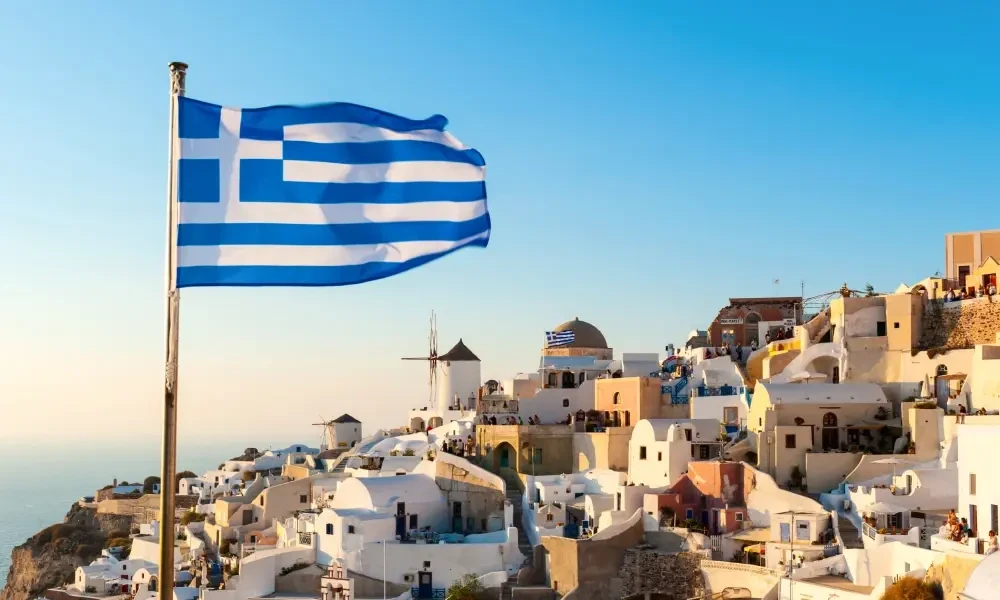
Source: KARTSIQ