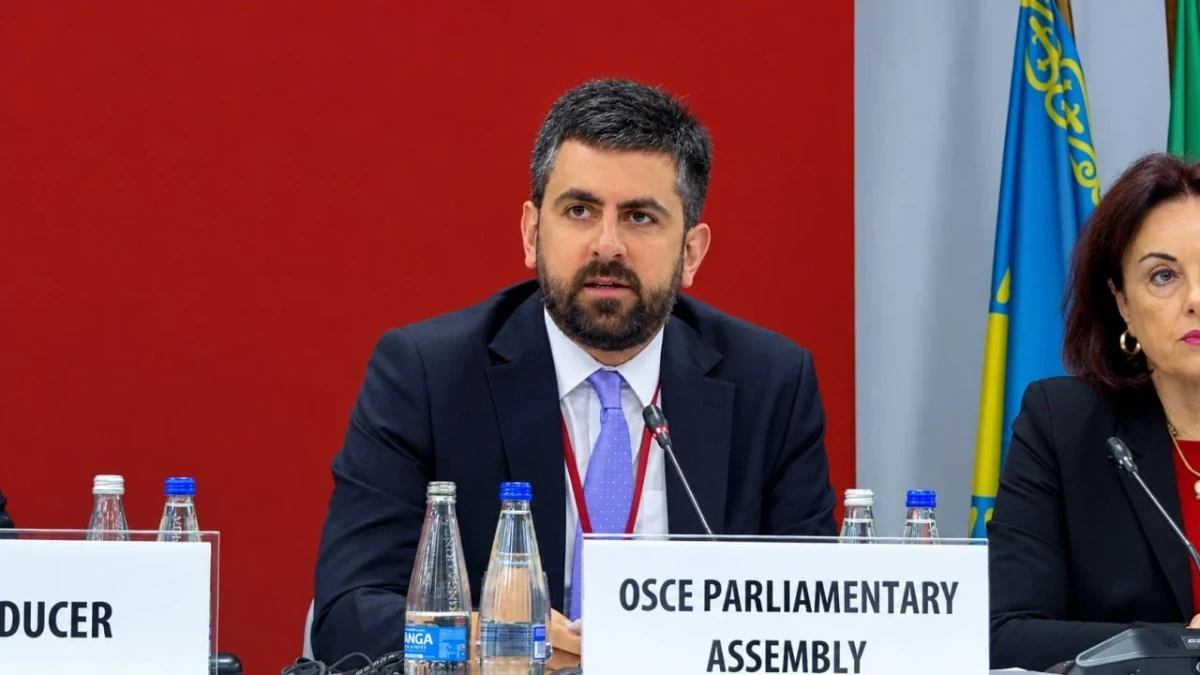
Sargis Khandanyan, head of the delegation of the National Assembly to the OSCE PA, is participating in the OSCE/ODIHR "Human Dimension-2026" conference in Warsaw. In his speech, Sargis Khandanyan said: "Dear guests, I am very happy to be here in Warsaw today and to have the opportunity to exchange opinions on a topic of central importance for our work. Dear Natalie, thank you for the introduction. Dear Megan, Thank you for hosting this discussion. I am very happy that the OSCE/ODIHR Director Maria Telalyan is also participating in this discussion with us. Dear friends, I am very interested in this discussion as it approaches this topic I am from two perspectives: as a deputy of Armenia and as the chairman of the Committee on Democracy, Human Rights and Humanitarian Affairs of the OSCE Parliamentary Assembly. These two positions are closely related. As parliamentarians, we are interested in the quality of our democratic institutions and electoral processes. And as the chairman of the Third Committee of the OSCE PA, I know that our work cannot be properly carried out without listening carefully to people who protect human rights, follow developments on the ground and work as citizens every day. in the direction of protecting the territory. Observation of elections has long been one of the priorities of the OSCE Parliamentary Assembly. Since 1993, our Assembly has observed more than 225 elections in more than 30 countries of the OSCE region, bringing together deputies who contribute their experience to the evaluation of electoral processes. In this work, we closely cooperate with ODIHR, and I would like, dear colleagues, to emphasize your role in this important work. The experience and methodology of ODIHR are indispensable for our joint efforts. We also highly value the cooperation with our parliamentary partners, including the Parliamentary Assembly of the Council of Europe. These relations give us the opportunity to exchange experiences, learn from each other and strengthen our joint contribution to democratic processes. The participation of parliamentarians in the observation of elections is of particular value. We know what it means to win a mandate from voters, to run an election campaign, to compete, and ultimately to be accountable to the people we represent. This experience gives us a valuable perspective on electoral processes. At the same time, it reminds us that it is our responsibility as observers to impartially assess the elections based on the commitments that OSCE participating States have made. Regardless of whether the elections are held east or west of Vienna, the same principles apply. The Copenhagen document sets out clear commitments to democratic elections, political pluralism and the fundamental freedoms that make real political competition possible. These are joint commitments, and their consistent implementation is essential to the credibility of our work. This year, the OSCE Parliamentary Assembly conducted observation missions during the elections held in Hungary and Kazakhstan. I had the honor of leading the observation mission in Hungary. We also recently returned from observing elections in Bosnia and Herzegovina and are preparing for further observation activities, including in Serbia. This work also has a personal meaning for me. Recently, I myself ran in the elections in my country, Armenia, where the Assembly also sent observers. As a candidate, personally participating in the election process allows you to realize very directly what is important. Elections are much more than voting procedures. They address a number of issues, such as whether candidates can compete fairly, whether voters have access to reliable information, whether the media can operate freely, and whether citizens � They are sure that their voice will be heard. This brings up a question that I particularly want to emphasize today, namely the importance of civil society in our election observation work. When our parliamentarians go on observation missions, our members receive information from a wide range of stakeholders involved in electoral processes, including the country's civil society organizations. from the sources. These briefings give our parliamentarians a significant opportunity to hear directly from people who know the country well, understand the local context and closely follow the electoral developments. Representatives of civil society can voice their concerns, comment on the challenges visible on the ground, and provide observations that help our observers gain a more complete picture of the election. About the environment. We highly value such discussions. They help our parliamentarians to be better informed and prepared to understand what they are dealing with on mission and on election day. They also give us the opportunity to listen to points of view that might otherwise escape our attention. Of course, no single briefing can reflect all experiences and viewpoints. This is why dialogue with a wide range of stakeholders is so important. Civil society is an important partner in understanding how democracy works in practice, as local organizations, independent observers, journalists and human rights defenders are often on the ground in our � Cheeks and ears. Their knowledge and experience are invaluable, especially in terms of understanding the barriers to participation, the conditions of political competition, and the challenges facing fundamental freedoms. Therefore, I would like to take this opportunity and urge civil society representatives to cooperate directly with our delegations when we are in your countries. Share your observations, voice your concerns, and tell us about what you see. We want to hear from you. Your input can help make our ratings more informed and recommendations more meaningful. As the chairman of the Third Committee, I would also like to emphasize that this dialogue should not be limited to the observation of elections with The interaction between parliamentarians and civil society is equally important in the context of wider activities in the field of democracy. Dear attendees, I hope today's discussion will give us an opportunity to share practical experience and identify ways to strengthen our joint work. The OSCE Parliamentary Assembly will continue to work closely with ODIHR, our parliamentary partners and civil society to support democratic elections in the OSCE region. After all, election monitoring is much more than just evaluating the electoral process. It implies accountability, mutual learning and ensuring the practical implementation of the commitments undertaken by the OSCE participating States. And most importantly, it reminds us that every election is based on the rights and votes of almost one billion citizens of the OSCE region. I look forward to hearing your views and continuing this important discussion with all of you. Thank you."
Armenia
Election monitoring is much more than just evaluating the electoral process. Khandanyan in Warsaw
Source: KARTSIQ