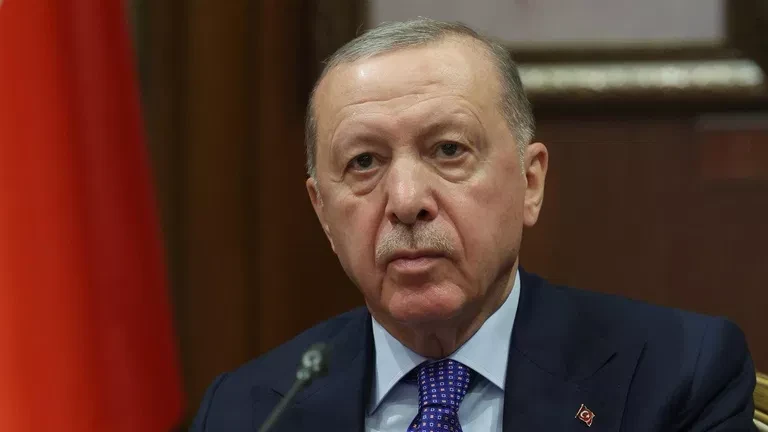
Turkish President Recep Tayyip Erdogan has stated that the modern international system is experiencing a deep crisis of legitimacy and trust, and international law and the decisions of international courts have actually lost their effectiveness. It is. "International law is practically suspended. It can be said that international agreements have lost their force. The decisions of the international courts are also not properly implemented," Erdogan said while speaking at the International Justice Summit on Friday. According to the Turkish leader, the main task of the international system based on rules and principles (as it is claimed) is to ensure global peace and security. However, achieving this goal is impossible without justice. Erdogan noted that the current system has seriously suffered from the point of view of representativeness, functionality and legitimacy, as well as lost trust and authority. He drew attention to the UN structure, noting that the will of more than 190 states actually depends on the decisions of the five permanent members of the Security Council, who have the right of veto. "We all realize that the structure in which the will of more than 190 countries included in the United Nations depends on the decisions of only five members who have the right of veto is not fair and healthy," Erdogan emphasized. According to him, the existing international system does not meet the principles of justice and cannot be considered stable. Erdogan has repeatedly advocated reform of the UN Security Council under the slogan "The world is bigger than five", referring to the excessive concentration of power in the hands of the five permanent members of the Security Council. In an article published for Bloomberg in early October, the Turkish leader proposed to abolish the right of veto and abandon the system of permanent membership in the Security Council. Instead, he advocated for the General Assembly to elect and re-elect members of the Council for a limited period of time. According to Erdogan, simply increasing the number of permanent members will not solve the problem of centralization of power.
International News
Erdogan: international law and decisions of international courts have lost their force
Source: KARTSIQ