Yellowstone's supereruption would not have been a sudden disaster without warning. Weeks before that, scientists would probably have noticed a whole set of alarming signs: earthquake swarms, accelerating surface uplift, geyser activity. temperature changes and increased concentration of volcanic gases. In the worst-case scenario, these processes could end in a VEI-8 class eruption, which would throw ash tens of kilometers upwards and cause severe damage to the North American subcontinent. fabrics. Moreover, we are talking about a hypothetical (supposed) scenario. Yellowstone regularly exhibits seismic and hydrothermal activity, and even the combination of a few unusual signs still doesn't mean an eruption is imminent. reports Sciencedaily.com. A few months ago, scientists would have noticed the first changes About 631,000 years ago, one of the largest known eruptions of the Yellowstone Volcanic System took place in present-day northwestern Wyoming. does. The ash spread across much of North America, and the particles that were thrown into the atmosphere affected the climate far beyond the region's borders. Today, such an event would be impossible to miss. Yellowstone is constantly monitored for seismology by satellites, GPS stations, earth deformation measuring devices, satellites and sensors placed in geyser regions. Scientists also regularly analyze volcanic gases and water chemistry. Such a scenario My first warning sign would be an unusual swarm of earthquakes. Experts would be watching the situation especially closely if the foci gradually moved upwards and became shallower. It could указывать (indicate) magma or hot hydrote� About the movement of mal fluids (liquids and gases). But a swarm of earthquakes alone would not signal impending disaster. Yellowstone experiences thousands of earthquakes a year, and similar periods of activity have already occurred without further eruption. In a month, the surface would begin to rise rapidly A few weeks later, in the hypothetical scenario, the earthquakes would continue and begin to occur closer to the surface. At the same time, GPS stations would record the distribution of points, and satellite radars would record � Accelerated rise of the earth's surface. Such a combination could indicate a crustal magma flow. But even here, scientists would not be in a hurry to immediately announce the beginning of the eruption. In 2013-2014, a caldera eruption was already observed in Yellowstone �Accelerated uplift of individual segments, more than 15 centimeters per year, combined with increased seismic activity. In 2014, earthquakes of up to magnitude 4.8 occurred, after which uplift was replaced by subsidence. Researcher They attributed the episode to the movement of hydrothermal fluids rather than rising magma. Therefore, in case of a new crisis, scientists would first strengthen observations. would install additional seismometers and GPS stations, take more frequent water and gas samples, and begin coordinating more closely with emergency services. In two weeks the situation could become critical Activity in the scenario under consideration It continues to increase dramatically. Earthquakes become more frequent and shallower, longer seismic oscillations appear, and the surface rises by centimeters within days. The hydrothermal system is also changing. Geysers begin to behave unproductively (unpredictably) and even the famous Old Faithful stops erupting at regular intervals. Changes in the chemical composition of the water are detected, and carbon dioxide is increasing in the caldera region Gas and sulfur gas concentration. Taken together, these signs would lead scientists to believe that magma is indeed moving upward. In the model described, two weeks before the catastrophic event, a supereruption occurs within the next three weeks The probability reaches 85-92%. The volcanic danger level is raised to observation stage and the aviation danger code to orange. An evacuation zone with a radius of about 100 kilometers is introduced around Yellowstone, which concerns about 200 thousand people. �nakchi and a large number of tourists. The first hours. first steam, then magma The eruption itself did not necessarily begin with an instantaneous explosion of the entire caldera. Initially, magma could seep into a shallow hydrothermal system, rapidly heating vast volumes of water. When water turns into steam Its volume increases about 1700 times under atmospheric pressure. If this process occurs underground, the sudden expansion is capable of producing powerful phreatomagmatic explosions that hurl steam, mud, and rock fragments kilometers away. up. After a few hours, gas-rich magma with a temperature of about 650–800 °C rises to the surface. As the pressure decreases, the gases dissolved in it begin to expand rapidly, turning the magma into a mixture of pumice stone and volcanic ash. to A huge eruption column is formed 30–50 kilometers high, significantly higher than the normal flight altitude of passenger aircraft. If the volume of emissions continues to rise, scientists will realize that it may be � Learn about a supereruption of class VEI-8, the maximum category of the volcanic explosivity scale. Ash paralyzes a vast area A tall plume throws ash into the upper atmosphere. Some of the material was originally distributed It blows in all directions, and then high-altitude winds begin to carry the tiny particles thousands of kilometers. Even more dangerous are pyroclastic flows, the extremely hot and rapid mixing of gas, ash and rock fragments. you In the case of the collapse of individual sections of the eruptive column, they can spread tens of kilometers, destroying vegetation and buildings in their path. In the immediate area of the eruption, the chances of survival would be extremely small. But time In the event of an evacuation, the number of direct casualties from the eruption itself may have been relatively small compared to the scale of the consequences. Far beyond Yellowstone, ash becomes the main enemy. In Denver, which is located about 800 kilometers from the volcanic system In the distance, the sky may be darkened by a huge cloud. Significant amounts of ash will fall in the northwestern United States and adjacent areas of Canada. In some places, its layer can reach tens of centimeters or more. Electricity Well, water and transport will start to go out of order Volcanic ash is not just a layer of mud. Small particles can damage engines, clog ventilation systems, and disrupt power grids. The wet ash becomes electrically conductive � can cause short circuits on power lines and substations. At the same time, its weight creates a load on roofs and structures. When the electricity starts to go out, new problems follow. water pumps and treatment plants stop, heating and charging stations fail, mobile communications and the Internet are disrupted. Airports are being closed because volcanic ash is dangerous to aircraft engines for Road and rail communication also appears disrupted. As a result, conventional supply chains quickly begin to break down. Stores remain without food, hospitals without part of the equipment, etc households, and the population faces shortages of fuel, water and other basic necessities. A few days later, the crisis goes beyond the borders of the United States Three days after the eruption, much of North America is already feeling its effects. Yes In the areas closest to Yellowstone, the thickness of the ash can be measured in meters. For Billings, Montana, some models give ash estimates of up to 1.8 meters. Salt Lake City and Boise could get tens of inches. More of the USA In regions north of Mexico and southern Canada, ash will be less, but still enough to seriously complicate breathing and infrastructure. Agriculture will be hit. ash covers pastures and fields, pollutes water and destroys crops. The animal dies. If the eruption continues, the new collapses of the eruptive columns create pyroclastic flows, and the subsidence of the caldera sections opens a new path. vents and magma vents. A few months later, the global climate effect begins A few months later, the main threat to people in North America is not so much the eruption itself as its long-term effects. The sulfur that � thrown into the upper atmosphere in the form of sulfur dioxide, turns into sulfate aerosols. They reflect some of the solar radiation and can spread throughout the Northern Hemisphere. This leads to a temporary global freeze. Then According to the climate models cited in the footnote, the Earth's average temperature is unlikely to decrease by more than about 1.5 °C, although changes in individual regions and seasons may be much greater. Central North America Moreover, it can remain significantly colder than usual. The consequences will affect food and the economy years later Agricultural losses in the US and Canada will affect the world market. Grain, corn and soybean meal A reduction in supplies will lead to an increase in food prices. At the same time, the problems related to the restoration of transport, insurance, banking system and infrastructure will be preserved. Disruption of scale in the North American economy And it will inevitably affect other countries. In affected areas, ash will rise again during dry and windy weather. Rain and snow will turn it into heavy mud that clogs drainage systems and complicates restoration efforts. Breathe For people with existing systemic diseases, polluted air will become a particularly serious problem. Damage to the medical infrastructure will further complicate treatment. Yellowstone would not destroy humanity Despite the catastrophic scale, Yellowstone � A supereruption does not mean automatic human extermination. Even such a scenario would not wipe out life from Earth. The main impact would be on North America and the global economy, and the climate consequences would be much wider. it Over time, the ash would settle, the atmosphere would clear, and vegetation would begin to return to the most affected areas. In place of the destroyed ecosystems, grasses and then forests would gradually appear. People would also return to that area and they would start to restore agriculture. The researchers note that the long-term health consequences could be significant. Long-term exposure to volcanic ash has been linked to lung and cardiovascular disease. However, it is impossible to determine the exact number of future victims in such a scenario. Hence the idea of Yellowstone as an event that was warranted It is "the end of humanity", does not correspond to the described scenario. It would be a global catastrophe with multi-year and possibly decadal ramifications, but not necessarily the end of human civilization or the species itself. And the most important thing. the scenario described is a thought experiment, not a prediction. Yellowstone does remain an active volcanic system, but unusual earthquakes, surface uplift, or changes in geysers by themselves do not mean a supereruption is imminent. is.
International News
What will happen if Yellowstone erupts? The biggest volcanic disaster scenario
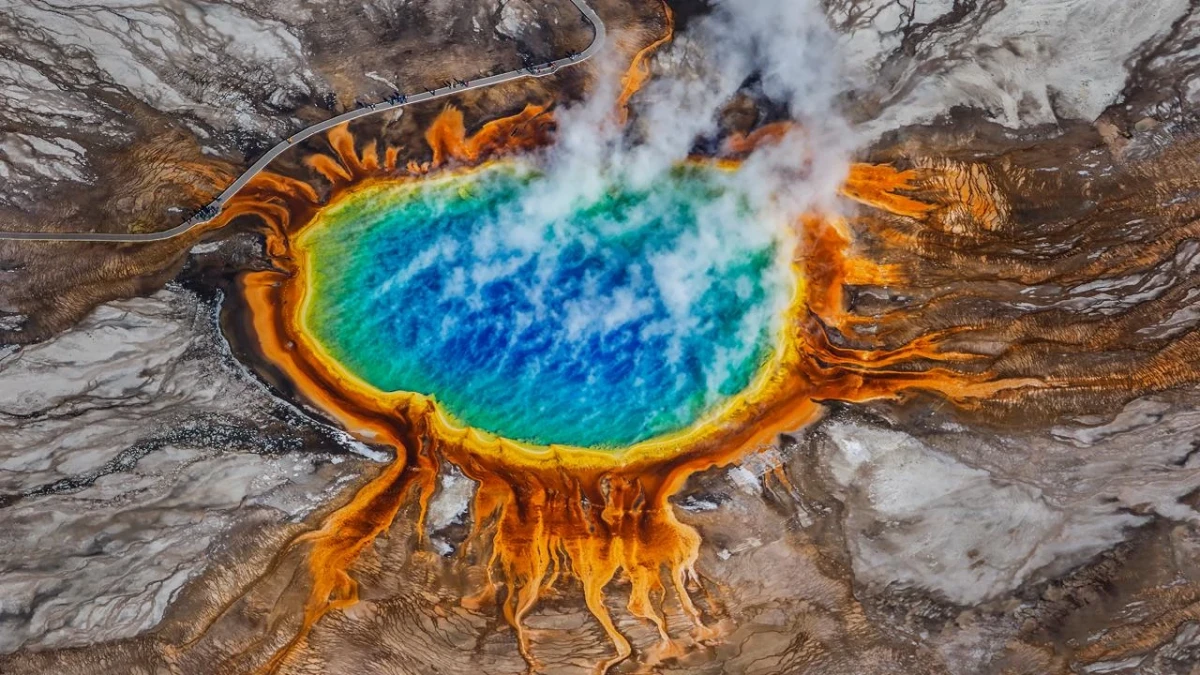
Source: KARTSIQ